Don't Buy the Wiz Gradient Floor Lamp Until You Read This Full Analysis
Introduction
The Wiz Gradient Floor Lamp is part of a newer generation of smart lighting aimed at bringing colorful, dynamic illumination to living rooms, home offices, and entertainment spaces. Manufacturers market gradient lamps as devices that can produce multiple colors across a single fixture, creating immersive backlighting and mood-setting effects that ordinary lamps cannot match. Before committing to one, buyers should understand how the Wiz Gradient performs in real homes, what trade-offs exist compared with alternatives, and whether its feature set aligns with everyday needs like reading, TV bias lighting, and smart home interoperability.
Product overview and what it promises
At its core, the Wiz Gradient Floor Lamp is designed to provide multi-zone, blended lighting across a vertical form factor. The product promises:
- Multiple color zones to create gradient effects rather than a single uniform color
- Smart control through the Wiz app and integration with mainstream voice assistants
- Tunable white for both warm and cool white light, plus full RGB color for accenting
- Presets and dynamic scenes such as music-sync, movie modes, and wake/sleep schedules
These claims are attractive on paper, but how they translate to real-world use depends on factors like brightness, color blending, app responsiveness, and the lamp's physical design. The following sections break down how the Wiz lamp performs in those practical areas and what buyers typically care about.
Detailed analysis: real-world performance
Build quality and design
The Wiz Gradient Floor Lamp is often described as visually minimal and modern, intended to occupy a corner without drawing too much attention when off. In real rooms, the lamp's height and thin profile work well behind sofas or next to TVs to provide accent and bias lighting. The physical build—materials, base stability, and finish—matters for safety and durability. Buyers report that the lamp's base is sufficiently weighted for typical placement, though stronger bumps (e.g., pets or active children) can cause wobble if the lamp is placed on uneven flooring.
Light uniformity and gradient quality
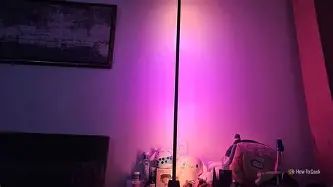
Gradient lamps rely on multiple LED segments and diffusers to mix colors. With the Wiz unit, the gradient effect is generally attractive for ambient and background lighting: transitions between adjacent colors are smooth when viewed from a distance, which makes the lamp well-suited for setting a mood or creating color accents behind a TV or desk. However, up close the segmented construction can be noticeable—banding and slight color separation may appear if the viewer is very close or looking from a sharp angle. For buyers planning to use the lamp as primary task lighting (close-up reading or detailed work), this is an important limitation to note.
Brightness and usable light
Brightness expectations depend on the lamp's intended role. The Wiz Gradient Floor Lamp excels as an ambient or accent fixture but should not be expected to replace dedicated reading lamps or overhead lighting. In medium to large living rooms the lamp provides enough light to create atmospheric illumination but may fall short of delivering concentrated, high-lumen output for tasks. For reading, pairing the Wiz lamp with a focused desk or reading light is a prudent choice.
Color accuracy and tunable white
Color accuracy is a mixed bag with many consumer-grade RGB fixtures. The Wiz lamp reproduces vivid colors and offers a wide selection in the app, which is excellent for decorative applications. For accurate color rendering—e.g., for photography, art work, or color-critical tasks—buyers should be cautious: RGB-based smart lamps typically cannot match the CRI (color rendering index) of purpose-built white light fixtures. The tunable white range (warm to cool) is useful for adjusting ambience across the day, but when precise white balance is necessary, one should compare measured CRI values or test in person.
Smart features, app, and voice control
Wiz is known for an app-first approach that uses Wi‑Fi connectivity and its own cloud services to manage devices. The app provides scenes, schedules, dynamic modes, and grouping with other Wiz luminaires. Setup is usually straightforward: connect the lamp to the home Wi‑Fi and link it to the app. Voice control with assistants such as Google Assistant and Amazon Alexa is commonly supported; the lamp can be added to routines and controlled by voice. Buyers who want local-only control or who run smart home hubs that rely on Zigbee/Z‑Wave may find the cloud-dependent model limiting. That said, plug-and-play ease for non-technical users is a real advantage.
Shop the latest Electronics picks on Amazon.
Shop Amazon →Latency, reliability, and firmware
Wi‑Fi-connected lights can be subject to app latency and occasional disconnects, especially on congested or weak wireless networks. Most users report the Wiz app is responsive for standard commands, but complex automations or rapid dynamic effects (e.g., music visualizers) can exhibit small delays. Firmware updates are delivered via the app; keeping the device up-to-date improves stability but may introduce occasional change that users need to adapt to. For buyers prioritizing rock-solid, local-only control, a Zigbee-based ecosystem may be preferable.
Privacy and data considerations
Because the Wiz system often leverages cloud services for remote control and features, buyers concerned about data privacy should review the manufacturer's privacy policy. Cloud features offer conveniences like remote control when away from home and cross-platform integrations, but they also require trust in the vendor's handling of account and usage information. Those wanting to minimize cloud exposure can limit remote features and rely on local network control when supported.
Common real-world use cases
- TV bias lighting: Create immersive backlighting that reduces eye strain and enhances perceived contrast while watching movies.
- Gaming and streaming setups: Accent the background with complementary colors that react to on-screen content or game events.
- Mood and ambience: Set morning warm light and cooler evening scenes, or cycle through colors for parties and gatherings.
- Photography/video background: Use the lamp as an accent source to color a background wall—be mindful of gradient banding close to the camera.
- Decor lighting: Subtle corner illumination that punctuates a room without replacing primary lights.
Pros & Cons
- Pros:
- Attractive gradient effects that enhance ambience
- Easy app-based setup with Wiz ecosystem features
- Voice control support for common assistants
- Good presets and scene options for casual users
- Works well as accent lighting for TVs, gaming, and mood-setting
- Cons:
- Not ideal as primary task or reading light
- Segment banding visible up close for some viewing angles
- Cloud and app dependence may concern privacy-minded buyers
- Color rendering for white light may not match high-CRI fixtures
- May lack the deeper hub integrations available with Zigbee ecosystems
Comparison: Wiz Gradient Floor Lamp vs. Competitors
| Model | Connectivity | Ecosystem | Gradient / Color | Ease of setup | Best for | Price category |
|---|---|---|---|---|---|---|
| Wiz Gradient Floor Lamp | Wi‑Fi (cloud-enabled) | Wiz app, voice assistants | Multi-zone gradient, smooth at distance | Simple — app guided | Ambient bias lighting, living rooms, gaming | Mid-range |
| Philips Hue Gradient Floor Lamp | Zigbee (Bridge recommended) & Bluetooth | Hue ecosystem, extensive third-party support | High-quality gradient with Hue sync integration | Requires Hue Bridge for full features | Home theaters, advanced smart-home setups | Premium |
| Govee Gradient Floor Lamp | Wi‑Fi / Bluetooth (Govee app) | Govee app, some voice assistant support | Vivid color options; variable gradient quality | App guided; can be quirky | Budget-conscious ambient lighting | Budget to mid-range |
Notes on the table: the Philips Hue option typically targets users who already invest in the Hue ecosystem and prefer local hub-based control and broader third-party integrations. Govee and Wiz compete more directly on price and app convenience, trading off some local integration for simpler setup and cloud features.
Buying guide: what to look for before purchase
When evaluating the Wiz Gradient Floor Lamp, buyers should compare a few practical dimensions that determine whether the lamp fits real needs.
1. Intended use and placement
Decide whether the lamp will be used as ambient accent lighting or as a task lamp. For ambient use—behind a TV, as a corner accent—the Wiz lamp is well-suited. If the goal is primary reading light, prioritize fixtures with higher directed output or pair the Wiz with a reading lamp.
2. Ecosystem and smart home compatibility
Consider whether the buyer already uses a smart home ecosystem. If local hub control, Zigbee integration, or complex automations are crucial, evaluate alternatives like Hue that may offer deeper platform integration. For those who prefer simple Wi‑Fi setup and cloud convenience, Wiz often provides a lower barrier to entry.
3. Color fidelity and gradient expectations
If color accuracy and seamless blending are top priorities—for example, for content creators or photographers—test the lamp in-store when possible or look for measured reviews that provide CRI or color uniformity data. For pure aesthetics and mood lighting, the Wiz gradients are typically more than adequate.
4. Network and latency considerations
Wi‑Fi devices depend on the home network. Buyers with congested Wi‑Fi or network segmentation should ensure the lamp will be on the same 2.4GHz network (if required) and located within range. If latency-free, local-only control is required, confirm whether the lamp supports local LAN commands or whether it relies entirely on the cloud.
Find top-rated Electronics products at great prices.
See Deals →5. Physical design and footprint
Measure the space before purchase. Floor lamps come in varied heights and base sizes. Ensure the lamp's height, brightness, and beam distribution match the intended spot—behind a couch, next to a TV, or near a workstation. Consider how the lamp's silhouette interacts with decor when off.
6. Durability, warranty, and support
Check warranty length and the manufacturer's support reputation. Smart lighting is not only hardware but also software—ongoing firmware updates and app maintenance matter. If support history and firmware cadence are important, research user reports for firmware-related regressions and the vendor’s responsiveness.
7. Price and total value
Assess how the lamp fits the overall budget for a smart-lighting scheme. If buying multiple fixtures to create cohesive color zones, the cost multiplies. Compare features offered and whether other investments (bridge, additional bulbs) are needed to meet long-term goals.
Practical tips for getting the best experience
- Place the lamp slightly behind seating or the TV to maximize the bias-lighting effect and minimize visible banding.
- Group the lamp with other Wiz fixtures for cohesive scenes and synchronized schedules.
- Use warm tunable-white presets in the evening to support circadian comfort, and cooler whites during daytime tasks.
- Keep firmware and app versions current, but review changelogs before updating if a stable setup is essential.
- Test voice commands and automations during the trial return window to ensure the lamp meets expectations in the real environment.
Who should buy — and who should look elsewhere
The Wiz Gradient Floor Lamp is a strong choice for buyers who want an attractive, app-driven lighting accent that adds color and ambience to a living space with minimal setup friction. It suits casual users, gamers, and people building affordable smart lighting scenes who prioritize convenience and vivid color options.
Buyers who should be cautious include those who need high-CRI task lighting, people requiring local-only hub integrations, or users who expect absolute color accuracy for professional content creation. Also, those with a strict privacy posture who prefer devices that can be fully controlled without cloud services may prefer hub-based alternatives.
Conclusion
The Wiz Gradient Floor Lamp delivers on the promise of dynamic, mood-setting illumination for most domestic use cases: ambient lighting, TV bias, gaming atmosphere, and decorative accenting. Its strengths lie in easy setup, rich app features, and visually appealing gradients when viewed from normal living distances. The trade-offs—limited task lighting, potential visible banding up close, and cloud dependence—are significant depending on an individual's priorities. Buyers should match the lamp’s intended role to their real-world needs, check compatibility with their smart home setup, and, when possible, test the product in situ before purchase. For many, the lamp will be a welcome addition that elevates a room’s ambience; for others with more specialized needs, alternative fixtures may be a better fit.