A Professional's Take on the New Archer Axe75
The landscape of home and small office networking has undergone a seismic shift with the introduction of Wi-Fi 6E. For years, the 2.4 GHz and 5 GHz bands have managed the heavy lifting of our digital lives, but as device density increases and high-bandwidth applications like 8K streaming, virtual reality, and massive cloud backups become the norm, these traditional frequencies have become increasingly congested. Enter the Archer Axe75, a high-performance router designed to bridge the gap between consumer accessibility and professional-grade networking capabilities. This article explores the nuances of this hardware from an editorial perspective, evaluating its architecture, performance metrics, and its place in a rapidly evolving ecosystem.
Networking professionals often look past the flashy marketing terminology to see what lies beneath the hood. With the Axe75, the conversation starts with the 6 GHz band. Unlike its predecessors, which were iterations of existing technology, the "AXE" designation represents the first time in nearly two decades that a massive new swath of spectrum has been opened for unlicensed consumer use. The Archer Axe75 is positioned as a mid-to-high-tier solution that aims to provide this "VIP lane" of connectivity without the enterprise-level price tag. It is a device built for the transition period—ideal for the early adopter who has already invested in a Wi-Fi 6E compatible smartphone or laptop but still needs to support a legacy of older IoT devices.
Infrastructure and Hardware Analysis
At the heart of the Archer Axe75 is a robust tri-band architecture. While many affordable routers settle for dual-band configurations, the Axe75 utilizes three distinct bands to distribute traffic efficiently. The total aggregate speed is marketed at 5400 Mbps, distributed across the 6 GHz, 5 GHz, and 2.4 GHz bands. From a technical standpoint, this allows for a sophisticated management of "airtime fairness," a critical feature in environments where old, slow devices might otherwise hog the bandwidth of newer, faster hardware. By segregating high-bandwidth tasks to the 6 GHz band, the router ensures that a PlayStation 5 or a high-end workstation isn't competing for signal with a smart lightbulb or a decade-old printer.
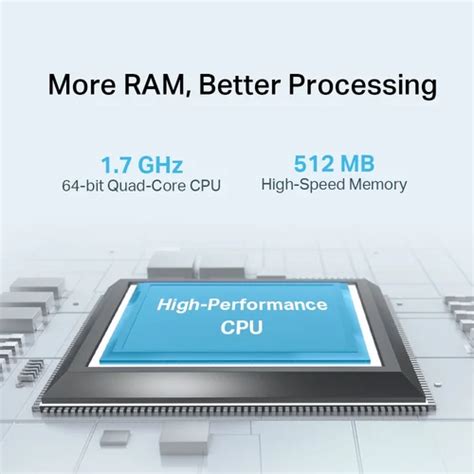
The physical design of the unit features six high-performance external antennas. These are not merely decorative; they are integrated with Beamforming technology, which identifies the location of connected devices and concentrates signal strength toward them rather than broadcasting in a uniform, wasted circle. Internally, the device is powered by a 1.7 GHz Quad-Core CPU. For the professional user, the processor is perhaps more important than the radio bands. A network is only as fast as its ability to route packets. With dozens of devices connected in a modern smart home, the CPU must handle a constant barrage of requests, encrypted data streams, and security checks. The Quad-Core architecture here ensures that the router doesn't "choke" during high-contention periods, such as when one family member is on a Zoom call while another is downloading a 100 GB game update.
The 6 GHz Revolution: Real-World Utility
The defining characteristic of the Archer Axe75 is undoubtedly its Wi-Fi 6E capability. To understand why this matters, one must look at the "spectrum crunch." In urban environments or apartment complexes, the 5 GHz band is often crowded with overlapping signals from neighbors, leading to interference and dropped packets. The 6 GHz band offered by the Axe75 provides seven additional 160 MHz channels. These wide channels are essential for low-latency tasks. For a professional working from home, this translates to a perceptible difference in stability. When using a 160 MHz channel on the 6 GHz band, the path is wide enough to handle massive data throughput without the "stop-and-go" traffic patterns experienced on narrower, crowded channels.
However, it is important to note the physical limitations of the 6 GHz band. Higher frequencies have shorter wavelengths, which means they do not penetrate walls as effectively as 2.4 GHz or even 5 GHz signals. In a professional analysis, the Axe75 is best viewed as a "line-of-sight" or "single-room" powerhouse for its fastest speeds. For a home office where the router is within 15 to 20 feet of the workstation, the performance is comparable to a wired Ethernet connection. For devices located across the house or behind multiple brick walls, the router’s advanced 5 GHz band remains the reliable workhorse, while the 6 GHz band serves as a dedicated high-speed link for the most critical hardware.
Detailed Performance Comparison
To better understand how the Archer Axe75 fits into the current market, it is helpful to compare it against standard Wi-Fi 6 (non-E) routers and entry-level mesh systems. The following table illustrates the typical performance expectations and specifications for a professional-grade setup in this category.
| Feature | Standard Wi-Fi 6 Router | Archer Axe75 (Wi-Fi 6E) | Entry-Level Mesh System |
|---|---|---|---|
| Frequency Bands | Dual-Band (2.4 & 5 GHz) | Tri-Band (2.4, 5, & 6 GHz) | Dual-Band (Variable) |
| Max Wireless Speed | Typically 1800-3000 Mbps | Up to 5400 Mbps | Typically 1200-3000 Mbps |
| Processor | Dual-Core 1.0-1.5 GHz | 1.7 GHz Quad-Core | Varies (often lower power) |
| Interface | 1G WAN/LAN | 1G WAN/LAN + USB 3.0 | 1G (Minimal Ports) |
| Best Use Case | General Home Use | High-Performance Work/Gaming | Large Homes/Multi-Floor |
| Congestion Handling | Moderate | Excellent | Good (via Node distribution) |
As the table indicates, the Axe75 excels in congestion handling and raw speed potential. While a mesh system might offer better coverage for a 5,000-square-foot mansion, the Axe75 provides a higher quality of service for a concentrated area. For professionals who deal with large file transfers—such as video editors or software developers—the local network speed (LAN-to-WLAN) is a critical metric. The inclusion of a USB 3.0 port also allows for basic Network Attached Storage (NAS) functionality, making it easy to share a drive across the local network without needing a dedicated server.
Shop the latest Electronics picks on Amazon.
View Offers →Pros and Cons: An Honest Assessment
Every piece of hardware involves trade-offs. While the Archer Axe75 is a formidable device, it is important to weigh its strengths against its limitations to determine if it suits your specific environment.
- Pro: Immediate Future-Proofing – Investing in 6E today ensures that as you upgrade your phone, tablet, and laptop over the next three years, you won't need to replace your router to take advantage of their new radios.
- Pro: Advanced Security Protocols – The device supports WPA3, which is the latest security standard. This provides improved protection against "brute-force" password attempts and enhances privacy on the network.
- Pro: Heat Management – The textured top and large footprint of the Axe75 are designed for passive cooling. In professional settings where the router stays on 24/7, preventing thermal throttling is key to maintaining consistent speeds.
- Pro: Comprehensive Firmware – The management interface allows for detailed control over QoS (Quality of Service), letting users prioritize specific devices like a work laptop over an archival backup.
- Con: 6 GHz Range – As mentioned, the 6 GHz band is sensitive to distance and physical obstructions. Users in older homes with thick plaster or concrete walls may find the 6 GHz coverage limited to the room the router is in.
- Con: Lack of Multi-Gig WAN – While the wireless bands are fast, the physical Ethernet ports are limited to 1 Gbps. For users with 2 Gbps or 5 Gbps fiber internet connections, the router becomes a bottleneck for a single wired device.
- Con: Size and Footprint – This is not a discreet device. With six antennas and a wide chassis, it requires a significant amount of shelf space and proper ventilation.
Buying Guide: Is the Archer Axe75 Right for You?
When selecting a router, professionals often counsel buyers to look at their "device inventory" rather than just the specs of the router itself. To determine if this specific model is a wise investment, consider the following three criteria.
1. Do You Reside in a High-Density Area?
If you live in a suburban area where your neighbors' houses are 50 feet away, you might not notice a significant difference between Wi-Fi 6 and Wi-Fi 6E. However, if you are in a city apartment where your phone detects 30 or 40 different Wi-Fi signals, the Axe75 is a game-changer. The 6 GHz band is currently a "ghost town" compared to the overpopulated 2.4 and 5 GHz bands, allowing your data to travel without interference.
2. What is Your Primary Use Case?
For casual web browsing and Netflix streaming, the Axe75 is likely overkill. However, for professionals engaging in "vibe coding," cloud-based IDE work, or high-stakes video conferencing, the reduction in jitter and latency is vital. Gamers will also find the 6 GHz band attractive, as it offers the closest experience to a wired connection in terms of ping stability, which is essential for competitive play.
3. Your Connectivity Roadmap
Check the specifications of your current hardware. Devices like the iPhone 15 Pro, Samsung Galaxy S23/S24 Ultra, and most high-end laptops released after 2023 support Wi-Fi 6E. If you own these devices, you are currently leaving performance on the table by using an older router. On the other hand, if your newest device is from 2020, you won't be able to "see" the 6 GHz band at all, and the router will function essentially as a standard Wi-Fi 6 unit until you upgrade your clients.
Advanced Configuration and Software Ecosystem
From a professional standpoint, the software experience is just as critical as the hardware. The Archer Axe75 offers a dual-path management system: a simplified mobile application for quick setups and a robust web-based GUI for power users. The web interface provides access to features like VPN Server and Client support (OpenVPN, PPTP, L2TP). This is particularly useful for remote workers who want to secure their entire home network or bypass regional restrictions at the router level rather than installing software on every individual device.
Furthermore, the router supports OneMesh technology. If you find that the 6 GHz signal doesn't reach your bedroom, you can add a compatible range extender to create a mesh network. This allows you to move throughout your home without being disconnected and reconnected to different network IDs. However, professionals should note that mesh backhaul usually occupies part of the bandwidth, so for the absolute best performance, a single powerful unit like the Axe75 in a central location is often preferred over multiple cheaper nodes.
One area of interest for the modern buyer is the integration of "HomeShield" or similar security suites found in modern routers. The Axe75 includes basic network scanning, IoT device protection, and parental controls. For an editorial take, it is worth noting that while these features are excellent for the average consumer, professionals might find them a bit restrictive compared to a dedicated firewall. Nonetheless, for a "set-it-and-forget-it" solution, having an added layer of security that monitors for malicious site access at the gateway is a significant benefit for home network hygiene.
Find top-rated Electronics products at great prices.
Browse Now →Professional Use Cases and Scenarios
To truly evaluate the Archer Axe75, one must look at how it performs in different professional scenarios. Consider the "Home Creative" user—someone who shoots 4K video and needs to upload it to a server or cloud storage. In a traditional 5 GHz environment, this upload might consume the entire bandwidth of the network, making it difficult for others in the house to even browse the web. With the Axe75, the creative professional can occupy the 6 GHz band for their massive transfers, leaving the 5 GHz band entirely free for the rest of the household. This "traffic segregation" is the hidden value of tri-band technology.
Another scenario is the "IoT-Heavy Smart Home." Modern houses often have 50 or more connected devices, from smart ovens to security cameras. Most of these devices are poorly optimized and use the 2.4 GHz band. A lower-end router would struggle to manage the "heartbeat" signals of 50 devices while also delivering a high-speed stream to a smart TV. The Archer Axe75’s Quad-Core processor acts as an efficient air traffic controller, ensuring that the small packets sent by a smart thermostat don't cause a "stutter" in a high-definition movie stream.
Finally, we must consider the "Remote Corporate Worker." The need for reliable, low-latency connectivity for Microsoft Teams, Zoom, or Slack calls has never been higher. Standard Wi-Fi is prone to "micro-stutters" when a microwave runs or a neighbor's router switches channels. The 6 GHz band is immune to microwave interference and is far less likely to suffer from channel-switching conflicts. For someone whose job depends on a stable connection, the Axe75 acts as a form of insurance against the unpredictability of wireless networking.
Final Professional Perspective
The Archer Axe75 represents the current "sweet spot" in the networking market. It avoids the exorbitant costs of "Quad-Band" ultra-high-end routers that cater to a very tiny fraction of the population with multi-gigabit internet, yet it moves significantly beyond the limitations of standard Wi-Fi 6. It is a hardware-first solution that prioritizes bandwidth availability and processing power.
While the lack of a 2.5 Gbps WAN port is a missed opportunity for a "pro" labeled device, it is a logical omission given the current state of consumer internet speeds. Most users are still on 300 Mbps to 1 Gbps plans, making the 1 Gbps port perfectly adequate. The real value lies in the wireless headroom. Providing a stable, 160 MHz wide channel in the 6 GHz band is the most effective way to improve the quality of a home network today.
In conclusion, the Archer Axe75 is a disciplined, high-performance router that delivers exactly what is needed for the modern digital era: more lanes for data to travel. It is a tool designed for performance, built with a focus on stability and congestion management. Whether you are a gamer looking for lower pings, a professional needing reliable video calls, or a tech enthusiast preparing for the next wave of Wi-Fi 6E devices, this router provides a robust foundation for a modern connected life. It successfully demystifies the complexity of 6E and brings it into a form factor that is both manageable and highly effective.